What We Do

Services

Every concrete job starts with the same question: what's this slab actually going to carry, and for how long.

Home › Services

Everything we take on

Every job below is one we do ourselves across College Park.

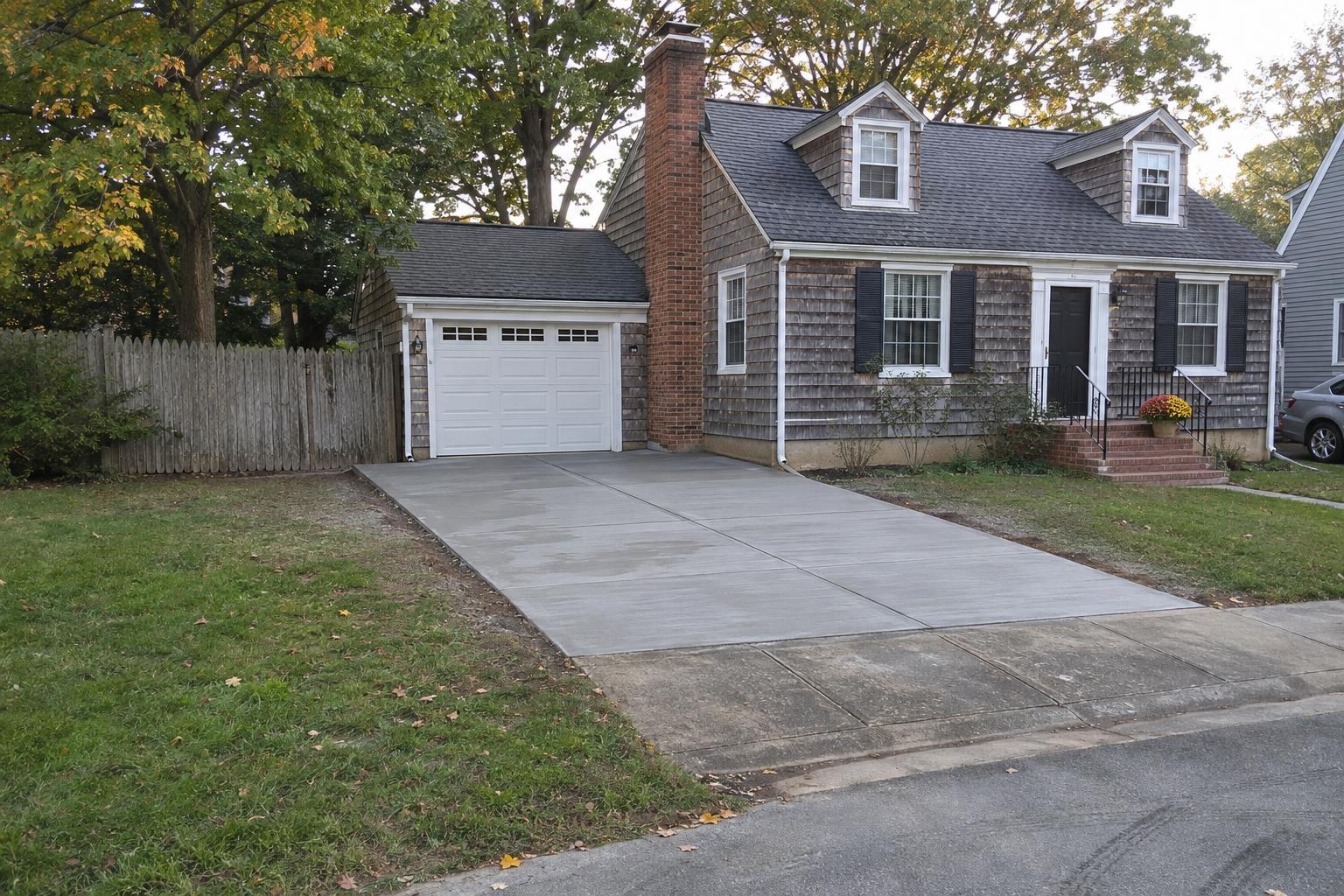
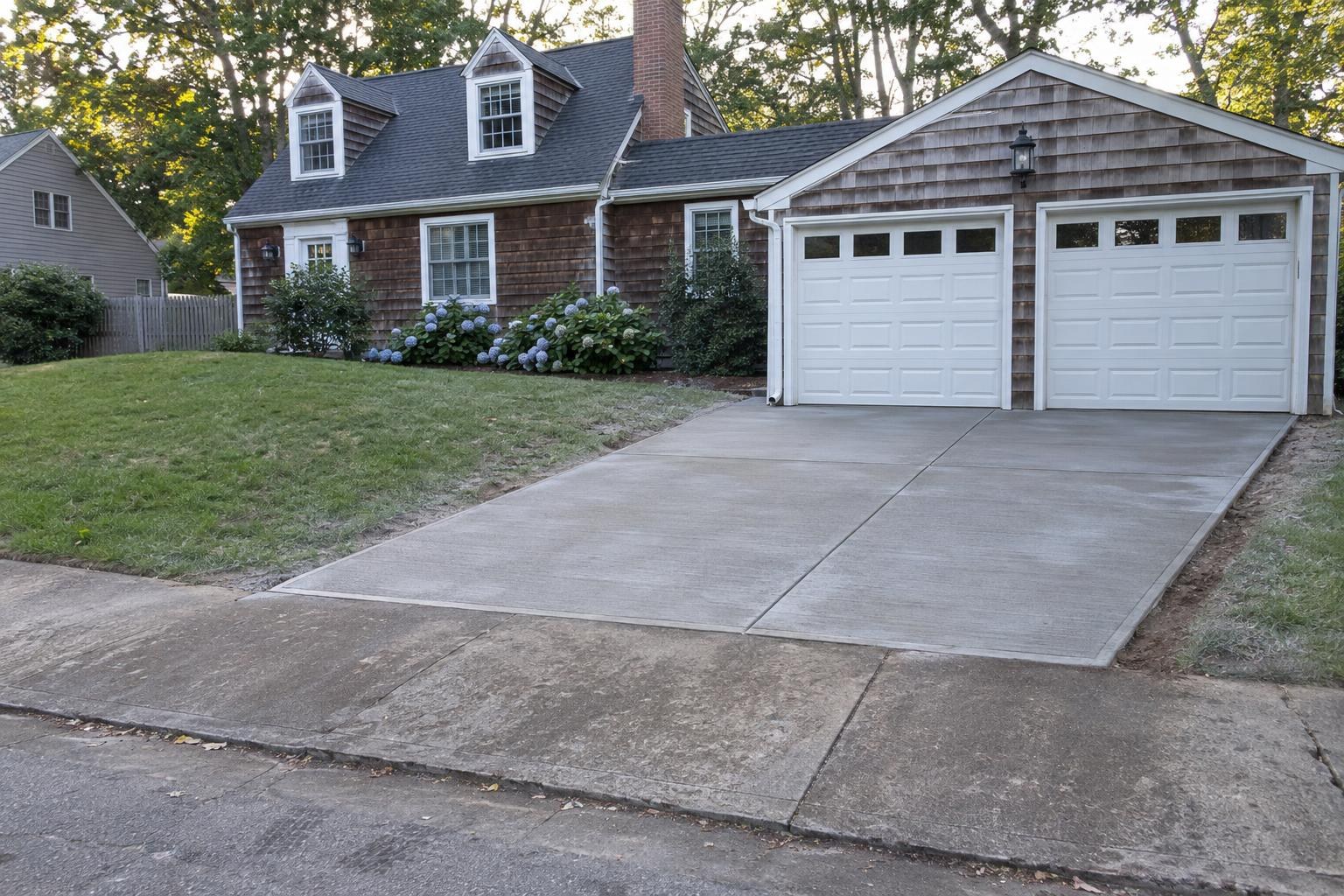
Concrete Driveways

A driveway takes more abuse than almost any other slab on your property, car weight, de-icing salt, and whatever your tires track in off the road. We build ours on a compacted gravel base with reinforcement sized to the load, usually rebar rather than mesh for anything a vehicle drives on. You'll wait about a week before parking on it, longer before anything heavier like an RV.

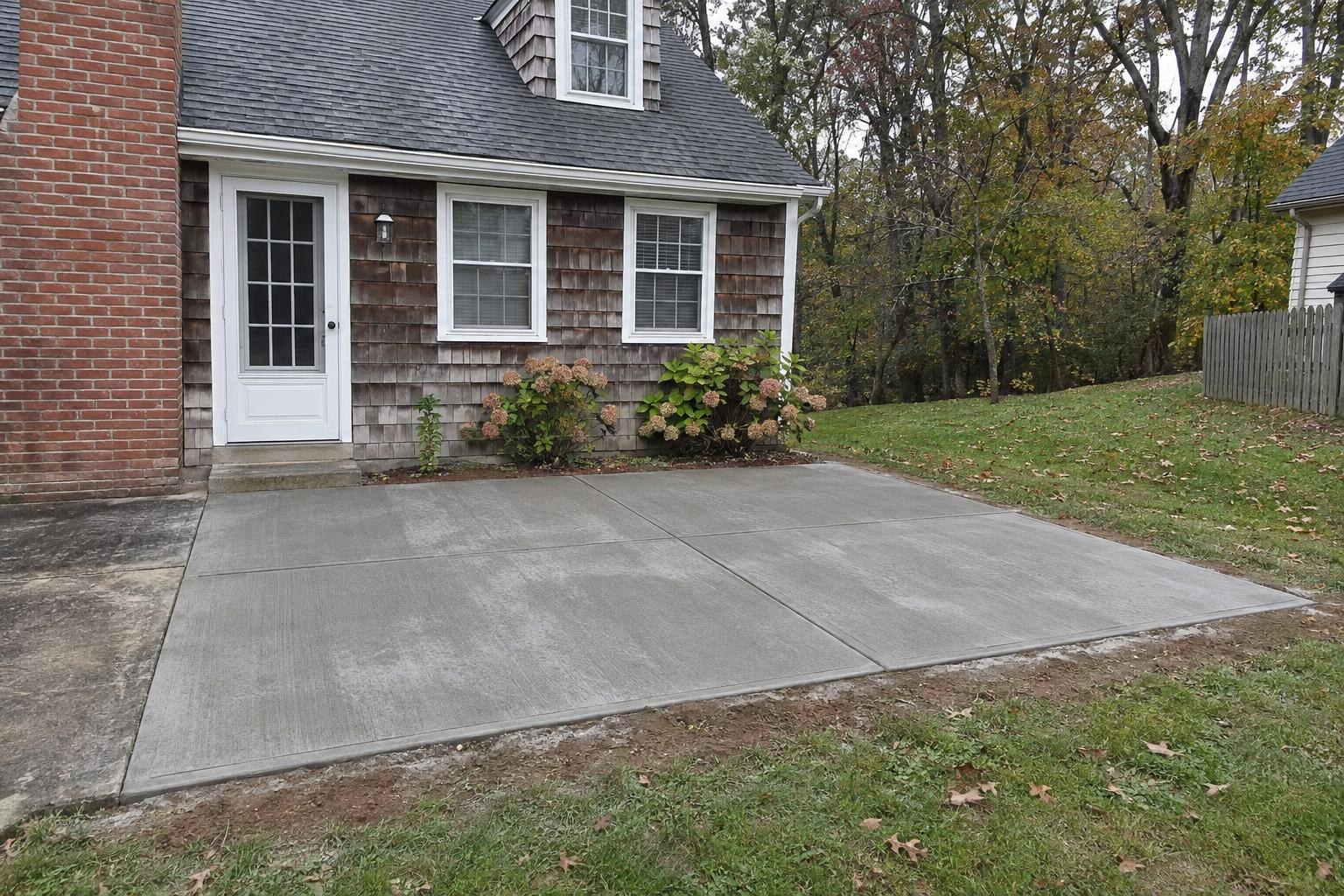
Concrete Patios

Patios fail mostly from water, not weight, a slab that doesn't pitch away from the house will birdbath after every rain and eventually heave. We slope ours about a quarter inch per foot and finish with a broom texture, stamped pattern, or exposed aggregate depending on what you want to look at for the next twenty years.

Stamped Concrete

Stamped concrete gets you the look of flagstone, brick, or slate without the joints weeds grow through. We color and texture the surface while it's still plastic, then seal it, which also protects against salt scaling in winter. Resealing every couple of years keeps the color from fading and the surface from going slick.

Concrete Sidewalks

Walkways get the most foot traffic of anything on the property and show cracking faster because the slabs are narrow and thin. We keep control joints close together, usually every four to six feet, so any cracking happens in the joint instead of across the middle of the walk.

Concrete Repair

Not every crack means you need a new slab. We patch surface cracks and spalling with a bonding agent and repair mortar matched to the existing finish, and for a slab that's sunk we can mudjack or polyjack it back to level instead of breaking it out. If the base underneath has washed out, though, replacement is usually the honest answer.

Concrete Slabs & Foundations

Sheds, garages, and additions all need a slab that's dead level and cured enough to carry a structure's weight. We set the vapor barrier, reinforce with rebar or mesh depending on the load, and give it the full 28 days before anything gets built on top.

Concrete Steps & Porches

Steps see more freeze-thaw cycling than a flat slab because water sits on every tread edge. We finish the nosing so it sheds water instead of pooling, and we reinforce the treads so they don't crack loose from the stringer over time.

Exposed Aggregate Concrete

Washing the top layer of cream off a fresh pour exposes the stone underneath, which gives you a non-slip surface that holds up well around pools and entries. It costs more in labor than a plain broom finish, since the timing of the wash has to be right before the slab sets too hard.

Concrete Resurfacing

If a driveway or patio is structurally sound but pitted, scaled, or just ugly, a bonded overlay can give it a new surface without the cost of tearing it out. It won't fix a slab that's cracked clean through or settling, that needs a mudjack or a full replacement instead.

Retaining Walls

Sloped yards and clay soil around here push a lot of lateral pressure on a retaining wall, so drainage behind it matters as much as the wall itself. We install gravel backfill and drain pipe so water doesn't build up and shove the wall forward.

How It Works

Four steps, and no surprises in any of them.

01

We come and look

You tell us what you want doing, we look at what is actually there, and we ask the awkward questions early.

02

You get a price

In writing, itemised, free. If something might add cost later we flag it now rather than at the end.

03

We do the work

Same crew throughout. We cover your floors, keep the dust down and tidy up before we leave each day.

04

We walk it with you

You point out anything you are not happy with and we fix it before the invoice, not after.

Where We Work

All of this, across College Park, MD

Soil and drainage vary block to block in this area, so jobs get priced based on the actual site, not a flat rate.

College Park, MD
Silver Spring, MD
Rockville, MD
Bowie, MD
Laurel, MD
Greenbelt, MD
Hyattsville, MD
Beltsville, MD
Lanham, MD
Riverdale Park, MD
District Heights, MD
Common Questions

Things worth asking

Things that come up once a concrete project is actually underway.

Do I need a permit for a new driveway or patio?
Many jurisdictions require a permit for new concrete driveways, especially where they meet the public right-of-way, while a patio entirely on private property may not need one. Permit requirements vary by county, so checking with the local building department or having the contractor pull it as part of the job is worth doing.
How long does it take to pour and finish a concrete slab?
A standard driveway or patio pour usually takes one to two days for forming and pouring, but the concrete needs about 24 to 48 hours before foot traffic and roughly a week before vehicles drive on it. Full cure strength takes about 28 days, though the slab is usable well before that.
Can concrete work be done on a tight budget?
Costs can be adjusted by choosing a plain broom finish over stamped or exposed aggregate, keeping slab thickness to code minimum rather than oversizing it, and reusing an existing base where it's still sound. Cutting corners on reinforcement or base prep to save money usually costs more later in repairs.
Do you guarantee your concrete work?
A workmanship guarantee covering cracking beyond normal control joints and defects in the pour is standard practice, though it typically doesn't cover damage from heavy equipment driving on new concrete too soon or from shifting soil unrelated to the work. Specific terms should be written into the estimate.
Who will I be dealing with during the project?
The person who gives the estimate typically oversees the pour and finish, so questions during the job go to someone already familiar with the site. Larger crews may split prep, forming and finishing among a few people, but one point of contact keeps communication straightforward.
What kind of concrete mix is used?
Most residential driveways and patios use a 3,500 to 4,000 PSI air-entrained mix, with air entrainment specifically helping the slab survive freeze-thaw cycles without scaling. Higher PSI mixes get used for areas that see heavier loads, like a parking pad.
Can I stay in my house during concrete work?
Staying in the house during a driveway or patio pour is no problem, though vehicle access may be blocked for several days while the new concrete cures. Noise from equipment is mostly limited to the demo and pour days rather than the full project.
What do I need to do to prepare the site beforehand?
Clearing furniture, vehicles, grills or planters off the work area ahead of time speeds up the job, and marking any buried sprinkler lines or low-voltage wiring helps avoid damage during excavation. Grading and base prep are handled on-site once access is clear.
What happens if something unexpected turns up once the old concrete is removed?
Soft or washed-out soil, old debris buried under a previous slab, or tree roots pushing into the base sometimes turn up once demo starts. Any of those get addressed before the new pour goes down, which can add a day or adjust the price depending on what's found.
How should finished concrete be cared for afterward?
Keeping vehicles and heavy loads off a new slab for the first week lets it reach enough strength to handle that weight, and avoiding de-icing salt through the first winter protects the surface from scaling while it fully cures. Sealing a driveway or patio every two to three years afterward helps it resist salt and water long term.

Not sure what you need?

Describe the problem and we will tell you what it probably is. No obligation.
Call (301) 355-2880